 by
by 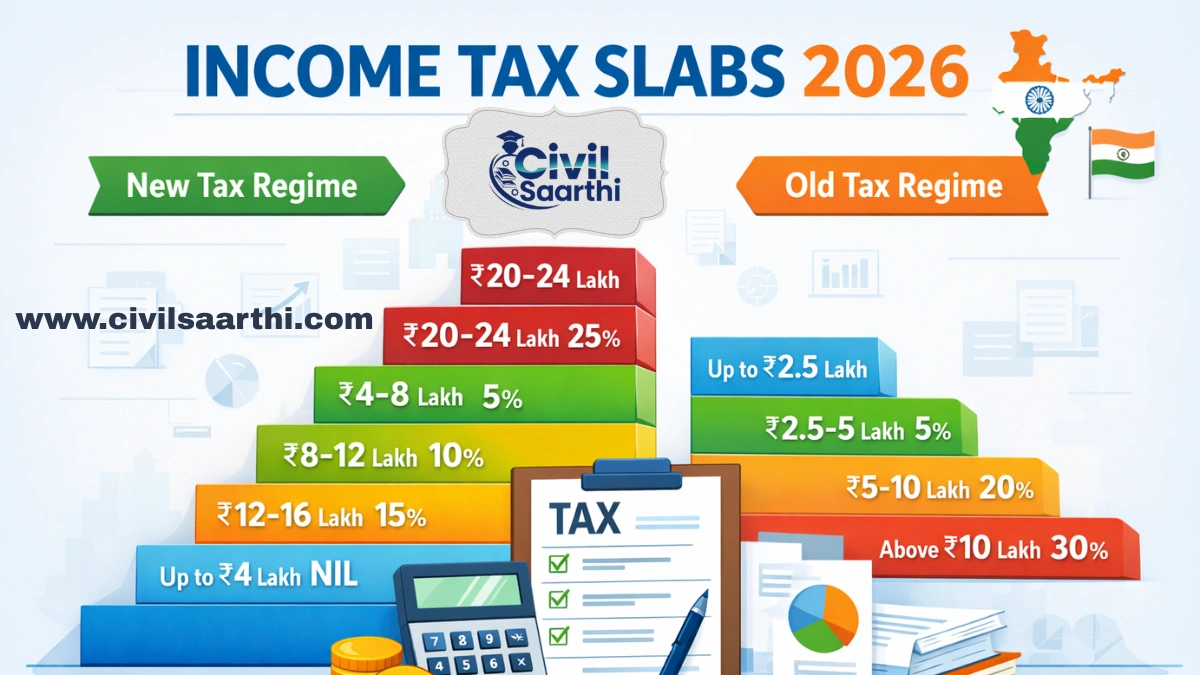
The Income Tax Slab 2026 plays a crucial role in determining how much tax an individual taxpayer must pay based on their annual income. The Government of India revises tax slabs periodically to simplify taxation and provide relief to taxpayers. For the Financial Year (FY) 2025-26 / Assessment Year (AY) 2026-27, taxpayers can choose between the New Tax Regime and the Old Tax Regime, each offering different tax rates and benefits.
Understanding the latest income tax slabs is essential for salaried employees, business owners, and professionals to plan their finances efficiently and reduce tax liability legally.
What is Income Tax Slab?
An Income Tax Slab refers to the range of income on which different tax rates are applied. India follows a progressive taxation system, which means:
- Higher income attracts higher tax rates.
- Lower-income groups pay less tax.
- The government provides exemptions and deductions to reduce tax burden.
Income Tax Slab 2026 (New Tax Regime)
For the Financial Year (FY) 2026-27 / Assessment Year (AY) 2027-28, the New Tax Regime is the default option for taxpayers in India. It features more granular tax slabs with lower rates for income up to ₹24 lakh, making taxation simpler and more transparent. Salaried individuals benefit from a ₹75,000 standard deduction, and taxable income up to ₹12 lakh is effectively tax-free due to the Section 87A rebate
Old Tax Regime: Income Tax Slabs FY 2025-26
The Old Tax Regime allows taxpayers to claim multiple deductions and exemptions like HRA, 80C, and 80D. It is suitable for individuals with investments or expenses eligible for tax benefits. The tax slabs vary for normal, senior, and super senior citizens, providing relief to older taxpayers.
Old Tax Regime Slabs for Individuals Below 60 Years
| Annual Income | Tax Rate |
|---|---|
| Up to ₹2,50,000 | Nil |
| ₹2,50,001 – ₹5,00,000 | 5% |
| ₹5,00,001 – ₹10,00,000 | 20% |
| Above ₹10,00,000 | 30% |
Old Tax Regime Slabs for Senior Citizens (60–80 Years)
| Annual Income | Tax Rate |
|---|---|
| Up to ₹3,00,000 | Nil |
| ₹3,00,001 – ₹5,00,000 | 5% |
| ₹5,00,001 – ₹10,00,000 | 20% |
| Above ₹10,00,000 | 30% |
Old Tax Regime Slabs for Super Senior Citizens (Above 80 Years)
| Annual Income | Tax Rate |
|---|---|
| Up to ₹5,00,000 | Nil |
| ₹5,00,001 – ₹10,00,000 | 20% |
| Above ₹10,00,000 | 30% |
Key Point: Old Tax Regime is ideal for taxpayers who want to claim exemptions and deductions to reduce taxable income.
New Tax Regime: Income Tax Slabs FY 2025-26 / AY 2026-27
The New Tax Regime is simple and straightforward, with lower tax rates for most income slabs. It has fewer deductions but offers effective tax savings up to ₹12 lakh due to Section 87A rebate. Salaried individuals also benefit from a ₹75,000 standard deduction, making filing easier.
Also Read: Repo Rate 2026
| Annual Income | Tax Rate |
|---|---|
| Up to ₹4,00,000 | Nil |
| ₹4,00,001 – ₹8,00,000 | 5% |
| ₹8,00,001 – ₹12,00,000 | 10% |
| ₹12,00,001 – ₹16,00,000 | 15% |
| ₹16,00,001 – ₹20,00,000 | 20% |
| ₹20,00,001 – ₹24,00,000 | 25% |
| Above ₹24,00,000 | 30% |
Key Point: New Tax Regime is perfect for taxpayers without many deductions who prefer a simple and lower-tax structure.
Section 87A Rebate & Standard Deduction
Section 87A allows eligible taxpayers to reduce tax liability to zero for certain income levels. The standard deduction further reduces taxable salary income, helping salaried individuals save more tax. Both Old and New regimes offer different limits for rebate and deduction.
| Tax Regime | Rebate Limit | Standard Deduction |
|---|---|---|
| New Tax Regime | ₹60,000 (Income up to ₹12 lakh) | ₹75,000 |
| Old Tax Regime | ₹12,500 (Income up to ₹5 lakh) | ₹50,000 |
Key Point: These provisions are especially useful for salaried taxpayers to reduce their overall tax liability efficiently.
Surcharge & Cess for FY 2025-26
High-income taxpayers must pay a surcharge in addition to regular tax, while all taxpayers pay 4% health and education cess. This ensures that individuals with higher earnings contribute proportionately more to government revenue.
| Income Range | New Tax Regime | Old Tax Regime |
|---|---|---|
| Up to ₹50 lakh | Nil | Nil |
| ₹50 lakh – ₹1 crore | 10% | 10% |
| ₹1 crore – ₹2 crore | 15% | 15% |
| ₹2 crore – ₹5 crore | 25% | 25% |
| Above ₹5 crore | 25% | 37% |
Key Point: Surcharge and cess apply on total tax payable and must be included while calculating final liability.
Old vs New Tax Regime: Which is Better?
Choosing between the two tax regimes depends on deductions and exemptions you can claim. The New Regime is simpler but offers fewer deductions, while the Old Regime allows significant tax-saving through investments and allowances. Planning your finances determines which regime saves more tax.
Key Point: Opt for New Regime if you have minimal deductions; Old Regime is better if you have HRA, home loan, or Section 80C/80D deductions.
How to Calculate Income Tax
Income tax can be calculated step by step:
- Compute Gross Total Income (salary, house property, business, capital gains, other sources).
- Subtract eligible deductions/exemptions based on chosen regime.
- Find Taxable Income.
- Apply tax slabs to calculate tax.
- Claim rebates if eligible.
- Add cess and surcharge if applicable.
- Subtract TDS, TCS, and advance tax to get net payable or refund.
Key Point: Following these steps ensures accurate computation and avoids penalties.
Income Tax Calculation Example FY 2025-26
Mr. Anban’s Details:
- Salary: ₹25,00,000
- HRA Exemption: ₹4,00,000
- Section 80C: ₹1,50,000
- Section 80D: ₹25,000
Taxable Income
| Particulars | New Tax Regime | Old Tax Regime |
|---|---|---|
| Salary | 25,00,000 | 25,00,000 |
| (-) Standard Deduction | 75,000 | 50,000 |
| (-) HRA Exemption | – | 4,00,000 |
| (-) Other Deductions | – | 1,75,000 |
| Taxable Income | 24,25,000 | 18,75,000 |
Tax Liability Computation
New Tax Regime:
| Slab | Taxable Amount | Tax Rate | Tax |
|---|---|---|---|
| Up to ₹4 lakh | 4,00,000 | 0% | 0 |
| ₹4 – 8 lakh | 4,00,000 | 5% | 20,000 |
| ₹8 – 12 lakh | 4,00,000 | 10% | 40,000 |
| ₹12 – 16 lakh | 4,00,000 | 15% | 60,000 |
| ₹16 – 20 lakh | 4,00,000 | 20% | 80,000 |
| ₹20 – 24 lakh | 4,00,000 | 25% | 1,00,000 |
| ₹24 – 24.25 lakh | 25,000 | 30% | 7,500 |
| Subtotal | – | – | 3,07,500 |
| Health & Education Cess @4% | – | – | 12,300 |
| Total Tax Liability | – | – | 3,19,800 |
Old Tax Regime:
| Slab | Taxable Amount | Tax Rate | Tax |
|---|---|---|---|
| Up to ₹2.5 lakh | 2,50,000 | 0% | 0 |
| ₹2.5 – 5 lakh | 2,50,000 | 5% | 12,500 |
| ₹5 – 10 lakh | 5,00,000 | 20% | 1,00,000 |
| Above ₹10 lakh | 8,75,000 | 30% | 2,62,500 |
| Subtotal | – | – | 3,75,000 |
| Health & Education Cess @4% | – | – | 15,000 |
| Total Tax Liability | – | – | 3,90,000 |
Savings with New Regime: ₹70,200
Conclusion
Understanding income tax slabs and rules for FY 2025-26 helps in accurate tax planning and filing ITR. The New Regime is simpler and better for minimal deductions, while the Old Regime is ideal for taxpayers with investments, HRA, and other exemptions. Proper planning ensures maximum savings and avoids mistakes while filing taxes.