 by
by 
The Comparison of the Indian Constitution with Other Countries is a key topic in the Indian Polity syllabus for UPSC. It helps aspirants understand how India’s Constitution has drawn influences from various global constitutional frameworks such as the UK, USA, Canada, Ireland, Australia, and South Africa.
Comparison of the Indian Constitution with Other Countries overview
In this section, we will explore the Comparison of the Indian Constitution with Other Countries across various democracies. The focus will be on both convergence and divergence, touching on executive structure, fundamental rights, federalism, judiciary, parliamentary procedures, and amendment procedures.
Overview of Comparison of the Indian Constitution with Other Countries | |
| Country | Key Influence on Indian Constitution |
| UK | Parliamentary system, Rule of Law |
| USA | Fundamental Rights, Judicial Review |
| Ireland | DPSP (Directive Principles of State Policy) |
| Canada | Quasi-federalism, Strong Centre |
| Australia | Concurrent List, Freedom of Trade |
| South Africa | Election of Rajya Sabha, Constitutional Remedies |
Comparison of the Indian Constitution with Other Countries – With UK
India has borrowed heavily from the British constitutional setup, especially regarding parliamentary democracy. The Comparison of the Indian Constitution with Other Countries, especially the UK, shows that India has adopted the Westminster system with suitable modifications to suit the Indian context.
Comparison of the Indian Constitution with Other Countries – With UK | ||
| Feature | United Kingdom | India |
| Executive | Nominal Head (Monarch) | Nominal Head (President) |
| Parliamentary System | Yes | Yes |
| Rule of Law | Core principle | Incorporated in Indian system |
| Bicameralism | House of Commons & Lords | Lok Sabha & Rajya Sabha |
| Cabinet System | Yes | Yes |
Comparison of the Indian Constitution with Other Countries – With USA
In the Comparison of the Indian Constitution with Other Countries, the USA is an important reference point, especially regarding fundamental rights, federalism, and separation of powers. India adapted the American Bill of Rights to craft its own Fundamental Rights and included Judicial Review as an essential component.
Comparison of the Indian Constitution with Other Countries – With USA | ||
| Feature | United States | India |
| Fundamental Rights | Bill of Rights | Part III of the Constitution |
| Judicial Review | Implied through Marbury v Madison | Explicitly mentioned |
| Written Constitution | Yes | Yes |
| Independence of Judiciary | Complete | Significant but subject to Parliament |
| Federalism | Dual federalism | Quasi-federalism |
Comparison of the Indian Constitution with Other Countries – With Ireland
The Irish Constitution greatly inspired India in terms of socio-economic objectives. The Comparison of the Indian Constitution with Other Countries demonstrates that the Directive Principles of State Policy (DPSP) were taken from the Irish Constitution to promote social and economic democracy.
Comparison of the Indian Constitution with Other Countries – With Ireland | ||
| Feature | Ireland | India |
| DPSP | Yes, socio-economic goals | Yes, Part IV |
| Nomenclature | President and Prime Minister | Same |
| Method of Presidential Election | Parliamentary Vote | Similar (Indirect Election) |
Comparison of the Indian Constitution with Other Countries – With Canada
Canada provided the model for India’s quasi-federal structure. In the Comparison of the Indian Constitution with Other Countries, Canada’s influence is visible in the strong Centre, residuary powers with the Union, and the concept of “peace, order, and good government.”
Comparison of the Indian Constitution with Other Countries – With Canada | ||
| Feature | Canada | India |
| Quasi-federal structure | Yes | Yes |
| Residuary powers | With Centre | With Centre |
| Appointment of Governors | By Federal Government | By President on Centre’s advice |
| Advisory Judiciary | Yes | Yes (Article 143) |
Comparison of the Indian Constitution with Other Countries – With Australia
Australia’s contribution lies mainly in federal provisions such as the concurrent list and freedom of trade across states. The Comparison of the Indian Constitution with Other Countries with Australia enhances the understanding of cooperative federalism.
Comparison of the Indian Constitution with Other Countries – With Australia | ||
| Feature | Australia | India |
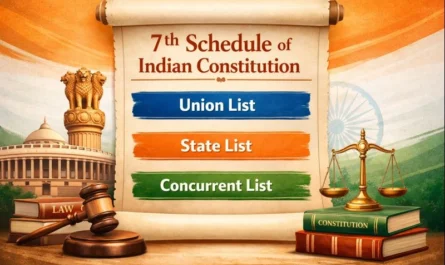
| Concurrent List | Yes | Yes (Seventh Schedule) |
| Freedom of Trade | Guaranteed | Article 301 |
| Joint Sitting of Parliament | Yes | Yes |
Comparison of the Indian Constitution with Other Countries – With South Africa
South Africa’s impact is seen in the area of constitutional remedies and the method of electing the Rajya Sabha members. The Comparison of the Indian Constitution with Other Countries with South Africa emphasizes modern, rights-based constitutional mechanisms.
Comparison of the Indian Constitution with Other Countries – With South Africa | ||
| Feature | South Africa | India |
| Constitutional Remedies | Yes | Yes (Article 32) |
| Election of Upper House | Indirect | Indirect (Rajya Sabha) |
| Post-Apartheid Equality Focus | Strong | Similar in Fundamental Rights |
Comparison of the Indian Constitution with Other Countries FAQs
What is meant by Comparison of the Indian Constitution with Other Countries?
It refers to analyzing similarities and differences between India’s Constitution and that of other nations like the UK, USA, Ireland, Canada, etc.
Why is the Comparison of the Indian Constitution with Other Countries important for UPSC?
It is a frequent topic in GS-II and Polity questions, especially in Prelims and Mains.
Which countries influenced the Indian Constitution the most?
The UK, USA, Ireland, Canada, Australia, and South Africa.
How did the USA influence the Indian Constitution?
Through the concept of Fundamental Rights, written Constitution, and Judicial Review.
What is the key takeaway from the UK in the Indian Constitution?
The parliamentary system and the principle of rule of law.
Is India a pure federal country like the USA?
No, India is quasi-federal with a strong unitary bias, as inspired by Canada.
What role does South Africa play in India’s constitutional framework?
South Africa influenced the mechanism of Constitutional Remedies and equality jurisprudence.