 by
by 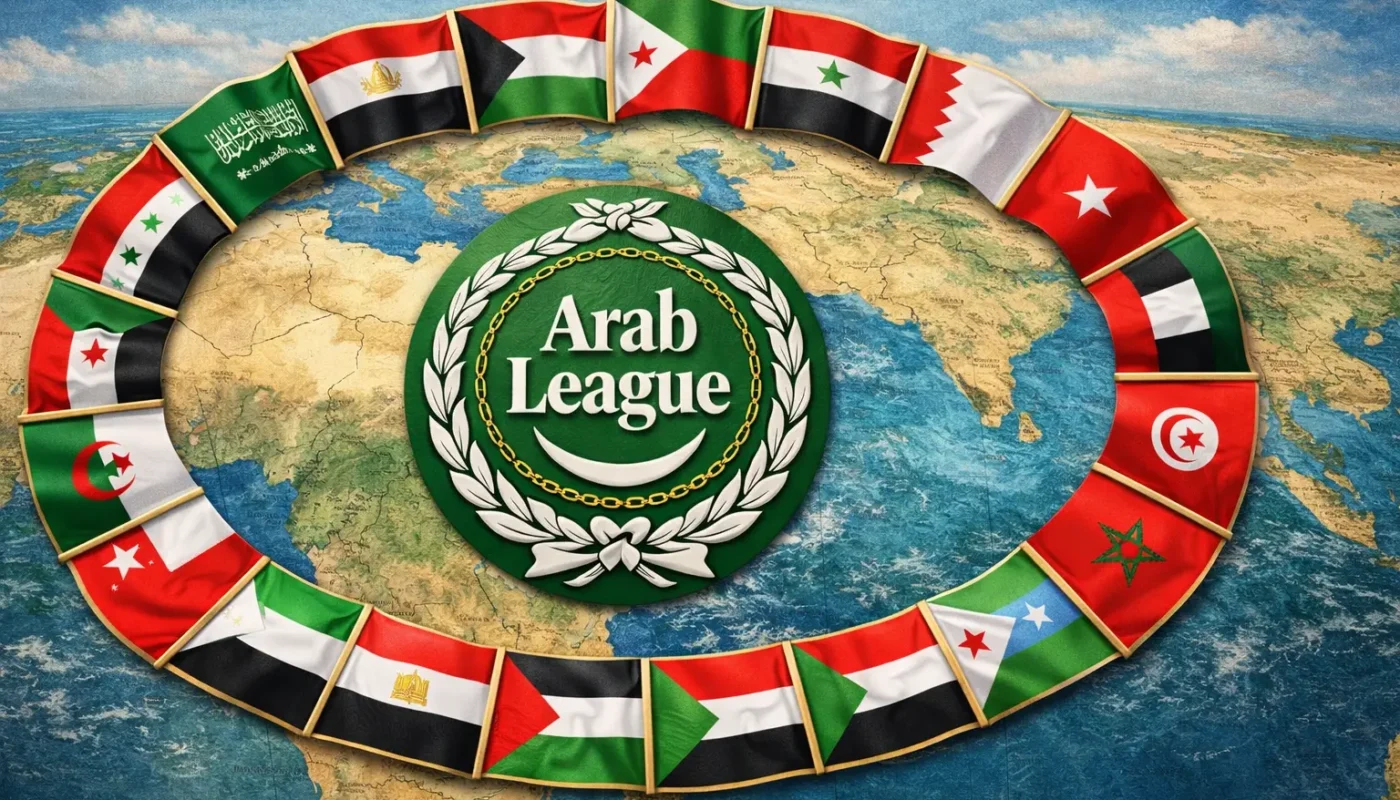
What is the Arab League?
The Arab League, officially called the League of Arab States, is a regional organization of Arab countries. It was created to bring Arab nations together and help them work as a team. The Arab League focuses on cooperation in political, economic, social, and cultural matters among its member countries.
When and Why Was the Arab League Formed?
The Arab League was formed on 22 March 1945 in Cairo, Egypt. It was established soon after World War II when Arab countries felt the need to unite and protect their common interests. The main aim was to promote unity, solve disputes peacefully, and strengthen cooperation among Arab nations.
Founder Members of the Arab League
The Arab League was originally founded by seven countries:
- Egypt
- Iraq
- Transjordan (now Jordan)
- Lebanon
- Saudi Arabia
- Syria
- Yemen
Member Countries of the Arab League
At present, the Arab League has 22 member countries from West Asia and North Africa. These countries share a common language (Arabic) and cultural traditions. Some important members include:
| S.No | Country | Capital | Region | Year Joined |
|---|---|---|---|---|
| 1 | Egypt | Cairo | North Africa | 1945 |
| 2 | Saudi Arabia | Riyadh | West Asia | 1945 |
| 3 | Iraq | Baghdad | West Asia | 1945 |
| 4 | Jordan | Amman | West Asia | 1945 |
| 5 | Lebanon | Beirut | West Asia | 1945 |
| 6 | Syria | Damascus | West Asia | 1945 |
| 7 | Yemen | Sana’a | West Asia | 1945 |
| 8 | Kuwait | Kuwait City | West Asia | 1961 |
| 9 | United Arab Emirates | Abu Dhabi | West Asia | 1971 |
| 10 | Qatar | Doha | West Asia | 1971 |
| 11 | Bahrain | Manama | West Asia | 1971 |
| 12 | Oman | Muscat | West Asia | 1971 |
| 13 | Algeria | Algiers | North Africa | 1962 |
| 14 | Morocco | Rabat | North Africa | 1958 |
| 15 | Tunisia | Tunis | North Africa | 1958 |
| 16 | Libya | Tripoli | North Africa | 1953 |
| 17 | Sudan | Khartoum | North Africa | 1956 |
| 18 | Somalia | Mogadishu | Horn of Africa | 1974 |
| 19 | Djibouti | Djibouti City | Horn of Africa | 1977 |
| 20 | Mauritania | Nouakchott | North Africa | 1973 |
| 21 | Comoros | Moroni | Indian Ocean | 1993 |
| 22 | Palestine | East Jerusalem* | West Asia | 1976 |
Arab League Headquarters
The headquarters of the Arab League is located in Cairo, Egypt. For a short period, it was shifted to Tunis, but later it was moved back to Cairo.
Arab League Objectives
The Arab League works to achieve several important goals:
- To promote unity and cooperation among Arab countries
- To protect the independence and sovereignty of member states
- To settle disputes between member countries peacefully
- To support Arab causes, including the Palestinian issue
- To encourage cooperation in education, culture, health, and economy
Arab League Structure
The Arab League has different bodies to carry out its work:
- Arab League Council: The main decision-making body where member countries meet
- Specialized Committees: These work on areas like economy, education, and health
- General Secretariat: Headed by the Secretary-General, who manages daily work
Role of the Arab League in Regional Politics
The Arab League plays an important role in regional politics by providing a common platform for Arab countries to discuss political issues and regional conflicts. It works to promote peace, stability, and cooperation in the Arab world.
Arab League and the Palestinian Issue
One of the key roles of the Arab League has been its support for the Palestinian cause. It has consistently demanded the creation of an independent Palestinian state and opposed illegal occupation of Palestinian territories.
Achievements of the Arab League
The Arab League has played an important role in bringing Arab countries together on political, economic, and cultural issues. It has provided a common platform for dialogue and cooperation among Arab nations since its formation.
Challenges Faced by the Arab League
The Arab League faces many difficulties in working effectively because of political differences and conflicts among its member countries. These challenges often reduce its ability to take strong and united decisions.
- Political divisions among member states make it hard to reach common decisions.
- Ongoing conflicts and civil wars in some Arab countries weaken unity and cooperation.
- Lack of strong enforcement powers limits the implementation of Arab League decisions.
- Differences in economic strength among members affect collective economic initiatives.
- External influence of global powers often impacts Arab League policies.
- Irregular participation of some member countries reduces effectiveness.
Conclusion
The Arab League is an important regional organization that brings Arab countries together. Formed in 1945, it aims to promote unity, peace, and cooperation among its members. Even though it faces challenges, the Arab League continues to play a key role in shaping political, economic, and cultural relations in the Arab world.