 by
by 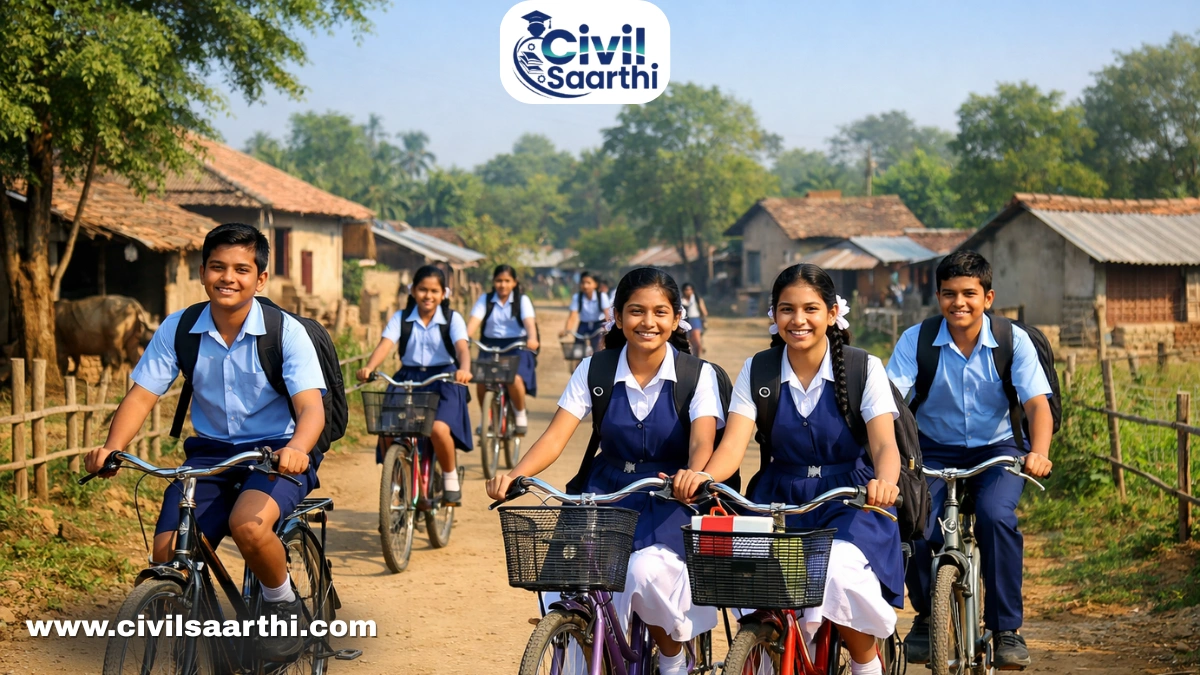
The Sathi Scheme is a flagship initiative by the Government of India aimed at improving access to education for students, especially in rural areas. By providing bicycles to students, the scheme ensures safe and easy travel to schools and colleges, promoting education, reducing dropouts, and empowering girls. This article explains everything you need to know about the Sathi Scheme in simple terms.
What is the Sathi Scheme?
The Sathi Scheme is a government program that provides free bicycles to students studying in government and government-aided schools and colleges. The initiative primarily focuses on girls and students from rural areas, helping them commute safely and efficiently to educational institutions.
The term “Sathi” translates to “companion” in Hindi, signifying that the bicycle becomes a trusted companion in a student’s educational journey.
The scheme reflects the government’s commitment to:
- Promote education in rural areas
- Encourage girls’ education
- Provide affordable and safe transportation
Sathi Scheme History and Background
The Sathi Scheme was first launched in Bihar in 2010, and later expanded to other states such as Jharkhand, West Bengal, and Madhya Pradesh. It was introduced to tackle several challenges:
- Distance Barrier: Many students in rural areas have to walk long distances to attend school.
- High Dropout Rates: Lack of safe transportation discourages students, especially girls, from continuing education.
- Gender Inequality: Female students often face safety risks when traveling alone.
- Financial Constraints: Many families cannot afford private transportation.
By providing bicycles, the government aimed to reduce these barriers and make education more accessible.
Sathi Scheme Objectives
The Sathi Scheme has several important objectives:
- Encourage Students to Continue Education – By reducing travel challenges, students are motivated to attend school regularly.
- Empower Girls – Special focus on girl students ensures their safety and promotes gender equality in education.
- Support Rural Education – Students in remote areas get reliable transportation to reach schools and colleges.
- Reduce Dropout Rates – With easier commuting options, students are less likely to leave school.
- Promote Eco-Friendly Transport – Bicycles reduce carbon emissions and encourage a healthy lifestyle.
- Provide Economic Relief – Families save money that would otherwise be spent on transportation.
Sathi Scheme Eligibility Criteria
The Sathi Scheme is designed for students from economically weaker sections, and the eligibility criteria generally include:
- Enrollment in government or government-aided schools or colleges.
- Preference for girls students to improve gender parity.
- Age typically between 10 to 19 years, depending on the level of education.
- Students from rural or semi-urban areas.
- Students must provide proof of residence, age, and school enrollment.
Note: Specific eligibility rules may vary slightly from state to state.
Sathi Scheme Benefits
The Sathi Scheme provides numerous benefits for students, families, and society:
| Benefits | Description |
|---|---|
| Safe Travel | Students can commute safely without relying on long walks or unsafe transport. |
| Financial Relief | Families save money on travel costs for their children. |
| Improved Attendance | Students are more likely to attend school regularly. |
| Girl Child Empowerment | Girls can travel safely, encouraging them to continue education. |
| Environmental Benefits | Promotes cycling, reducing carbon emissions. |
| Health Benefits | Cycling keeps students physically active and healthy. |
How to Apply for the Sathi Scheme
The application process may differ slightly across states, but usually follows these steps:
- School Registration: Schools or colleges identify eligible students and register them with the local government or education department.
- Document Submission: Students must submit proof of age, residence, and enrollment.
- Verification: Authorities verify the eligibility and documents submitted.
- Selection of Beneficiaries: Eligible students are shortlisted.
- Distribution of Bicycles: Bicycles are distributed through schools or local government offices.
Tip: Students and parents should contact their school authorities or the state education department for official notifications and timelines.
States Implementing the Sathi Scheme
The Sathi Scheme has been implemented successfully in several Indian states:
- Bihar – The first state to launch and expand the program.
- Jharkhand – Focused on rural areas and girls’ education.
- West Bengal – Targeted government school students with priority for girls.
- Madhya Pradesh – Promoted access to education in remote villages.
- Odisha – Active implementation to reduce dropout rates among rural students.
Other states are gradually adopting similar initiatives following central government guidelines.
Also Read: List of Government Schemes Related to Women
Sathi Scheme Impact
Since its launch, the Sathi Scheme has made a significant impact:
- Increase in School Enrollment: More students, especially girls, are attending schools regularly.
- Reduction in Dropouts: Students no longer skip school due to transportation issues.
- Empowerment of Girls: Girls are now able to travel safely, reducing gender disparity in education.
- Support for Rural Communities: Families in rural areas can afford education for their children without worrying about commuting costs.
Challenges Faced by the Sathi Scheme
While the scheme has been largely successful, there are challenges that need attention:
- Maintenance of Bicycles: Some students face issues with repairing bicycles due to lack of local facilities.
- Limited Awareness: Not all eligible students are aware of the scheme.
- Distribution Delays: Bureaucratic delays sometimes slow down bicycle distribution.
- Quality Concerns: Poor-quality bicycles can reduce the scheme’s effectiveness.
Addressing these challenges will make the scheme more impactful.
Conclusion
The Sathi Scheme is a powerful step toward inclusive education, girl child empowerment, and rural development. By providing bicycles to students, it removes the transportation barrier, encourages school attendance, reduces dropouts, and promotes gender equality. As more states adopt this initiative, it is expected to have a transformative impact on education in India.