 by
by 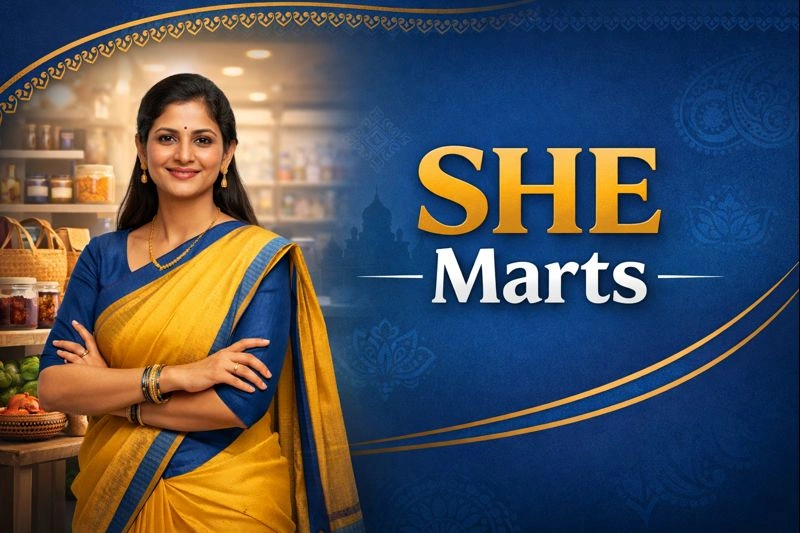
SHE Marts stands for Self-Help Entrepreneur Marts. It was announced by the Finance Minister in the Union Budget 2026‑27. These marts are special stores run by women for women, especially those in rural areas, to help them sell their own products, earn money, and become independent.
SHE stands for Self-help Entrepreneur Marts, which are community-owned retail outlets managed by women through Self-Help Groups (SHGs) and cluster-level federations.
What Are SHE Marts?
SHE Marts are retail outlets owned by women’s groups, mainly Self-Help Groups (SHGs). These stores will give women a permanent place to sell their products, instead of selling from home or temporary stalls.
The main goals of SHE Marts are:
- Give women direct access to customers
- Help women brand their products
- Provide sustainable income opportunities
- Support women-owned small businesses with better financing
SHE Marts are a step forward from the old system of giving small loans. Now, women can own their businesses and run them like proper entrepreneurs.
Also Read: Economic Survey 2026
Why Are SHE Marts an Extension of the Lakhpati Didi Programme?
The Lakhpati Didi programme trained women in skills like tailoring, weaving, LED bulb making, plumbing, and drone operations. Women earning at least ₹1 lakh per year through these skills were recognized as Lakhpati Didi. SHE Marts build on this by helping women transition from earning income to running enterprises, making it a natural extension called Lakhpati Didi 2.0. The shift looks like this:
| From | To |
|---|---|
| Loan-dependent income | Revenue-driven business |
| Small, home-based work | Structured business setup |
| Limited local selling | Wider market access |
| No brand or store | Own retail outlet/platform |
| Focus on loan repayment | Focus on growth & profits |
Features of SHE Marts
- Cluster-Level Federations: Marts will be set up where multiple SHGs join together, enabling collaboration and resource sharing.
- Eligibility: Women-led SHGs earning at least ₹1 lakh per year can participate.
- Gender Budget Support: The Gender Budget allocation is 9.4% of the total budget, highlighting the government’s focus on women empowerment.
- Enterprise Ownership: Moves women from loan-based livelihood to structured businesses with market access.
- Community Ownership: SHGs and federations collectively manage the marts, promoting grassroots leadership.
- Permanent Retail Points: Provides year-round selling opportunities, boosting stable income.
- Enhanced Financing: Offers better access to loans and innovative financial instruments.
- Product Support: Encourages handicrafts, textiles, processed foods, home essentials, and other locally made products.
Why SHE Marts Matter for Women Entrepreneurs
SHE Marts help women:
- Grow their businesses beyond local sales
- Take control of pricing, branding, and operations
- Access larger markets and reach more customers
- Collaborate with other women entrepreneurs in shared retail spaces
- Move from survival income to profit-driven businesses
The Role of Inventory and Warehouse Management
As women move into organised retail, managing multiple stores and products becomes important. Proper inventory and warehouse management ensures smooth operations. Key aspects include:
- Real-time stock updates across stores and warehouses
- SKU-level tracking to avoid mistakes
- Automated stock updates when products are sold, received, or moved
- Visibility across locations to know where items are available
- Demand-based replenishment to prevent stockouts or overstocking
- Accurate tracking of incoming and outgoing products
What is the Lakhpati Didi Programme?
The Lakhpati Didi Programme is a government initiative that helps women in rural areas earn a steady income of at least ₹1 lakh per year through skill development and small business opportunities. It focuses on empowering women by providing training, resources, and support to become financially independent.
Key Features of the Lakhpati Didi Programme
- Income Target: A woman is recognized as a Lakhpati Didi if her household earns at least ₹1 lakh annually through income-generating activities.
- Skill Development: Women are trained in practical skills such as: Tailoring and weaving, Plumbing and repair work, LED bulb production and Drone operation and maintenance
- Support for SHGs: Training and income opportunities are provided mainly through Self-Help Groups (SHGs) to encourage teamwork and community growth.
- Entrepreneurial Guidance: Women are guided on starting small businesses, managing income, and using their skills for long-term financial stability.
- Financial Independence: The programme aims to help women become self-reliant, reduce dependence on loans, and contribute to household income.
- Scale of Impact: The government plans to train millions of women under this initiative to expand women’s participation in rural entrepreneurship.