
 by
by 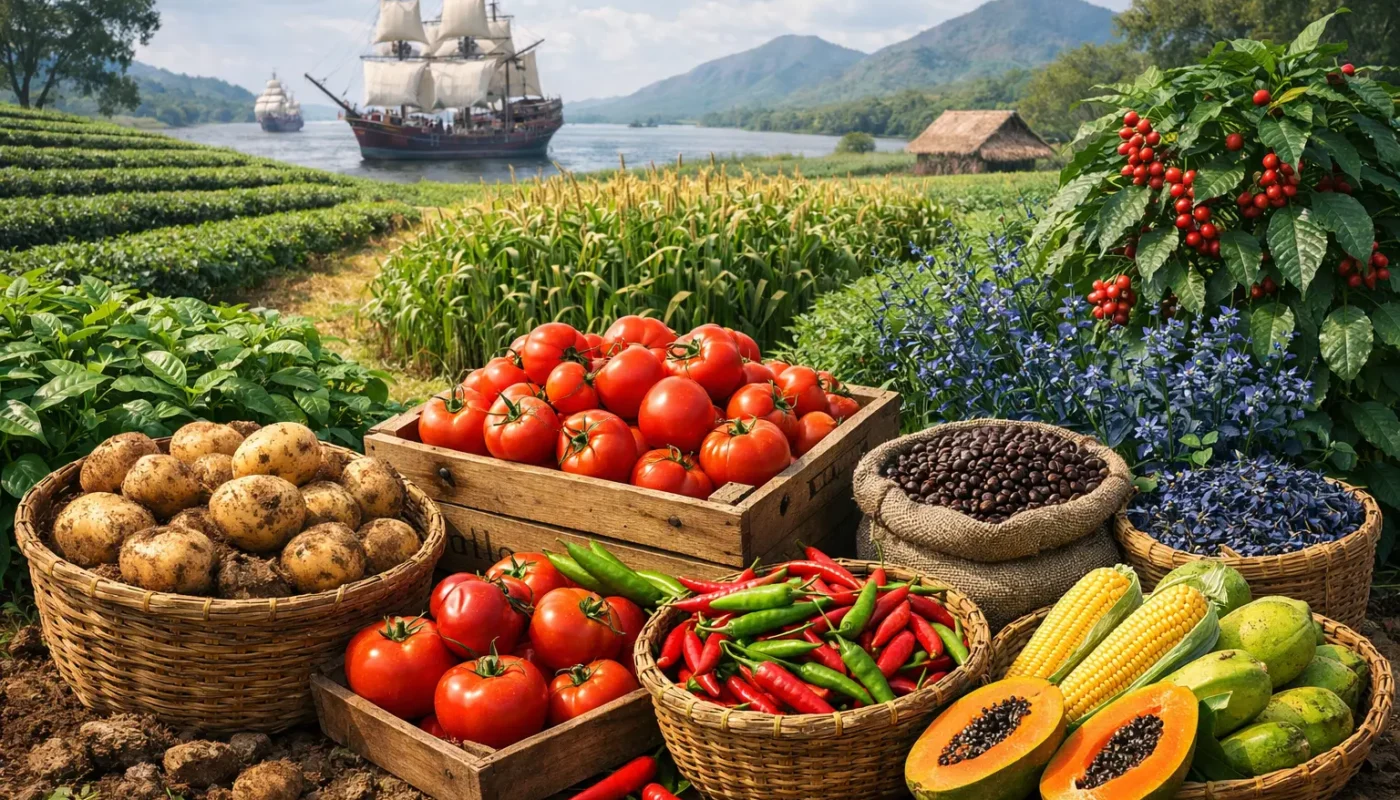
The arrival of Europeans in India from the late 15th century marked a turning point not only in trade and politics but also in Indian agriculture. Portuguese, Dutch, British, French, and other European traders and colonizers introduced several new crops from the Americas, Africa, and Europe. These crops gradually became an integral part of Indian farming, food habits, and the rural economy.
Background: European Contact and Agricultural Exchange
After Vasco da Gama reached India in 1498, India became part of the global Columbian Exchange. European powers used India as a hub for trade and experimentation with new plants. Many crops were brought from the New World (Americas) and cultivated in Indian soil due to favorable climatic conditions. Over time, these crops transformed Indian agriculture and diets.
Major Crops Introduced by Europeans in India
The Europeans introduced several important crops in India such as potato, tomato, maize, chilli, tobacco, tea, coffee, and indigo through global trade networks. These crops diversified Indian agriculture, transformed food habits, and promoted commercial farming during the colonial period.
1. Potato
The potato was introduced mainly by the Portuguese in the 17th century from South America. It adapted well to Indian climatic conditions and became a staple vegetable across the country. Today, India is one of the largest producers of potatoes in the world.
2. Tomato
The tomato, also introduced by the Portuguese, originated in South America. Initially used as an ornamental plant, it later became an essential ingredient in Indian cuisine, especially in curries, gravies, and chutneys.
3. Maize (Corn)
Maize was brought to India by European traders, particularly the Portuguese, from the Americas. It is now widely grown in states like Karnataka, Madhya Pradesh, Bihar, and Telangana, used both as food and fodder.
4. Chilli
One of the most influential crops introduced by Europeans was chilli. Before its arrival, Indian food relied on black pepper for spiciness. Introduced by the Portuguese in the 16th century, chilli quickly replaced pepper due to its high yield and strong flavor, becoming central to Indian cuisine.
5. Tobacco
Tobacco was introduced by the Portuguese and later promoted by the British. It became an important commercial crop and source of revenue during colonial rule, though it also led to social and health concerns.
Plantation and Commercial Crops
6. Tea
Although tea originated in China, its large-scale cultivation in India was started by the British in the 19th century. Tea plantations in Assam, Darjeeling, and Nilgiris were developed mainly for export, making tea one of India’s most important commercial crops.
7. Coffee
Coffee cultivation expanded significantly under European influence, especially by the British and Dutch. Plantations were developed in South India, particularly in Karnataka, Kerala, and Tamil Nadu.
8. Indigo
Indigo was promoted by the British as a commercial dye crop for European textile industries. Its forced cultivation led to severe exploitation of Indian peasants, culminating in the famous Indigo Revolt of 1859–60.
Fruits Introduced by Europeans
9. Papaya
Papaya, native to Central America, was introduced by Europeans, most likely the Portuguese. It is now widely grown in tropical regions of India due to its fast growth and nutritional value.
10. Pineapple
Pineapple was also introduced through European traders from South America. Today, it is cultivated in Kerala, Assam, West Bengal, and northeastern states.
Impact of European-Introduced Crops on Indian Agriculture
Diversification of Agriculture
Crops like potato, tomato, maize, and chilli added variety to Indian farming.
Farmers no longer relied solely on traditional crops like rice, wheat, and millets.
This diversification helped stabilize food supply and reduced dependency on a few staple crops.
Improved Nutrition and Food Habits
Introduction of fruits like papaya and pineapple and vegetables improved the dietary diversity of Indians.
Spices like chilli became central to Indian cuisine, influencing cooking patterns across regions.
Commercialization of Agriculture
Crops like tea, coffee, indigo, and tobacco were cultivated primarily for trade and export, not just local consumption.
Farmers increasingly grew cash crops, linking agriculture to the global economy.
Integration into Global Trade
India became part of the Columbian Exchange and European trade networks.
Crops like indigo and coffee were exported to Europe, generating revenue but also making farmers dependent on colonial markets.
Technological and Cultivation Changes
Introduction of plantation crops led to the development of new farming techniques, irrigation methods, and estate management.
Regions like Assam (tea) and South India (coffee) saw the emergence of specialized agricultural zones.
Economic and Social Impact on Farmers
While commercial crops generated income, forced cultivation of indigo and tobacco under colonial policies often exploited farmers.
This led to protests and revolts, like the Indigo Revolt of 1859–60, highlighting social tensions in agriculture.
Long-Term Influence on Indian Agriculture
Many European-introduced crops like potato, tomato, maize, and chilli became staple crops over time.
Plantation crops like tea and coffee remain major contributors to India’s export economy.
Regional Agricultural Transformation
Certain regions specialized based on crop suitability:
Assam, Darjeeling – Tea plantations
South India – Coffee plantations
Eastern India – Indigo cultivation
UPSC CSE Prelims PYQS
Q. Consider the following fruits: [2025]
I. Papaya
II. Pineapple
III. Guava
How many of the above were introduced in India by the Portuguese in the sixteenth and seventeenth centuries?
(a) Only one
(b) Only two
(c) All the three
(d) None
Answer: (c) All the three
Q. Which one of the following groups of plants was domesticated in the ‘New World’ and introduced into the ‘Old World’? [2019]
(a) Tobacco, cocoa and rubber
(b) Tobacco, cotton and rubber
(c) Cotton, coffee and sugarcane
(d) Rubber, coffee and wheat
Answer: (a) Tobacco, cocoa and rubber
Impact of European-Introduced Crops on Indian Agriculture FAQs
Q1. Which European-introduced crop had the biggest impact on Indian cuisine?
Chilli had the greatest influence, completely transforming Indian food by replacing black pepper as the main source of spice.
Q2. How did European crops diversify Indian agriculture?
Crops like potato, tomato, maize, and papaya added variety to traditional farming, reducing dependency on staples like rice, wheat, and millets.
Q3. Which crops were mainly introduced for commercial purposes?
Tea, coffee, indigo, and tobacco were promoted for trade and export, creating cash crops and integrating India into global markets.
Q4. Did European-introduced crops have any negative effects on farmers?
Yes, forced cultivation of crops like indigo and tobacco often led to exploitation, heavy taxation, and rural unrest, exemplified by the Indigo Revolt of 1859–60.
Q5. Are European-introduced crops still important in India today?
Absolutely. Crops like potato, tomato, chilli, tea, and coffee have become staples in Indian agriculture, cuisine, and export economy.
Q6. Which regions in India specialized in European-introduced crops?
- Assam & Darjeeling – Tea plantations
- South India (Karnataka, Kerala, Tamil Nadu) – Coffee plantations
- Eastern India – Indigo cultivation