 by
by 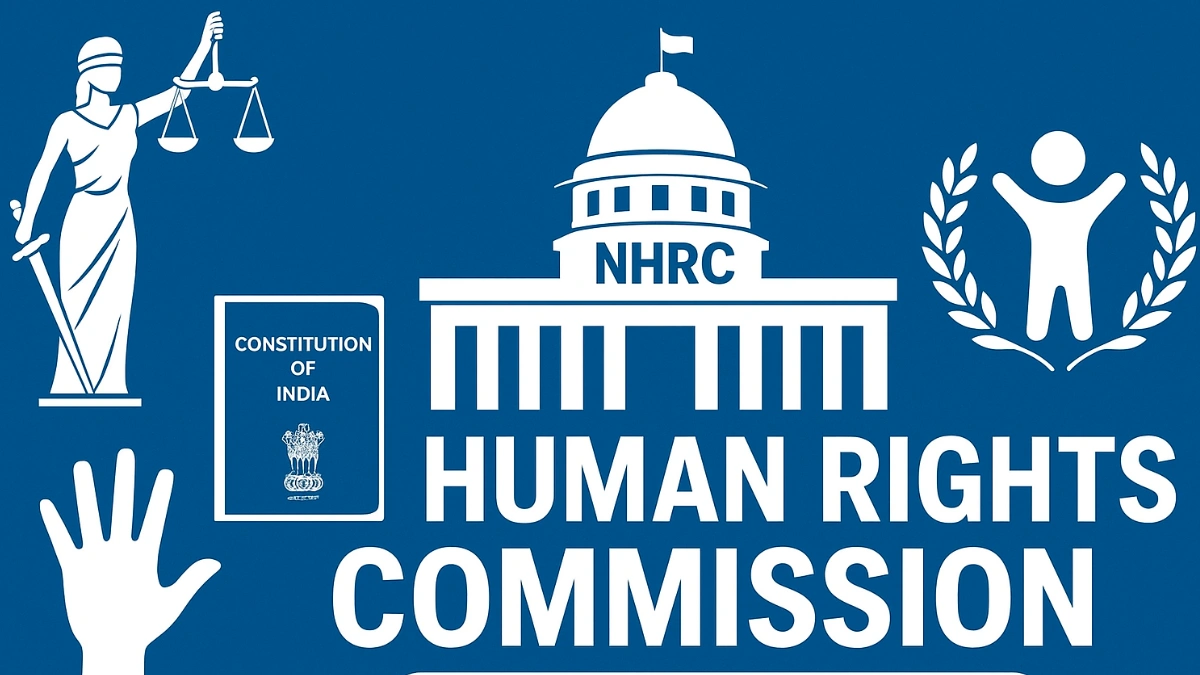
The National & State Human Rights Commission play a crucial role in protecting and promoting human rights in India. These institutions ensure that the dignity of individuals is upheld and that the executive, legislature, and even judiciary remain accountable in matters of human rights violations. Established under the Protection of Human Rights Act, 1993, they function as quasi-judicial bodies independent of government control.
National & State Human Rights Commission
The National & State Human Rights Commission were set up to investigate complaints of human rights violations by public servants, recommend corrective measures, and spread human rights awareness. The National Human Rights Commission (NHRC) works at the central level, while State Human Rights Commissions (SHRCs) operate at the state level, each ensuring that citizens’ rights are not infringed upon by the state or its agents.
National & State Human Rights Commission Overview
The National & State Human Rights Commission operate as watchdogs over human rights in India. NHRC is a statutory body headquartered in New Delhi, while SHRCs are established by respective states. These commissions act on petitions, suo motu cases, or referrals, and while they don’t have enforcement powers, their recommendations carry significant moral and institutional weight.
| Overview of National & State Human Rights Commission | ||
| Feature | NHRC | SHRC |
| Legal Basis | Protection of Human Rights Act, 1993 | Protection of Human Rights Act, 1993 |
| Jurisdiction | Entire country (except J&K) | Respective State |
| Appointment Authority | President of India | Governor of the State |
| Head | Chairperson (usually a former Chief Justice of India) | Chairperson (former High Court Judge) |
| Tenure | 3 years or until age 70 | 3 years or until age 70 |
Composition of National & State Human Rights Commission
The National & State Human Rights Commission are multi-member bodies consisting of a Chairperson and several members who are experts in law, human rights, and public affairs. This ensures that human rights are monitored through diverse perspectives and with institutional competence.
| Composition of National & State Human Rights Commission | |
| Body | Composition |
| NHRC |
|
| SHRC |
|
National & State Human Rights Commission Functions and powers
The National & State Human Rights Commission have wide-ranging powers to inquire into human rights violations, recommend compensation, advise governments, and undertake research and awareness campaigns.
| Functions and Powers of National & State Human Rights Commission | |
| Function Category | Description |
| Inquiry Power | Inquire into human rights violations, suo motu or on complaints |
| Judicial Proceedings | Powers of a civil court (summon, documents, witness examination) |
| Recommendations | Suggest action, compensation, or policy reform |
| Institution Inspection | Visit jails, detention centers to monitor conditions |
| Research & Awareness | Promote human rights education and awareness programs |
| Advisories to Government | On treaties, laws, and rights-based governance |
Powers of National & State Human Rights Commission – Detailed Table
The National & State Human Rights Commission derive quasi-judicial powers from the Protection of Human Rights Act. Though they cannot enforce their decisions, their powers create significant pressure on the government and administration.
| Powers of National & State Human Rights Commission – Detailed Table | ||
| Power | National Human Rights Commission | State Human Rights Commission |
| Civil Court Powers | Yes | Yes |
| Recommend Compensation | Yes | Yes |
| Suo Motu Cognizance | Yes | Yes |
| Jail & Detention Centre Inspections | Yes | Yes (in state jurisdiction) |
| Review Constitutional Safeguards | Yes | Yes |
| Investigate Public Servants | Yes | Yes (state-level public servants only) |
| Private Parties (Indirectly Involved) | Yes (if aided/abetted by public officials) | Yes |
Limitations of National & State Human Rights Commission
Despite their wide mandate, the National & State Human Rights Commission face challenges such as non-binding recommendations, backlog of cases, and limited jurisdiction over the armed forces.
| Limitations of National & State Human Rights Commission | |
| Limitation | Impact |
| Advisory Nature | Recommendations not binding on governments |
| Jurisdictional Restrictions | Cannot investigate private actors directly unless state is involved |
| Limited Enforcement Power | No authority to punish or compensate without government approval |
| Delay in Appointments | Affects functioning and credibility |
| Armed Forces Exclusion | NHRC can only seek reports from the Centre; no direct action allowed |
Landmark Cases Related to National & State Human Rights Commission
The National & State Human Rights Commission have dealt with several significant human rights cases that have shaped their credibility and public trust.
| Landmark Cases Related to National & State Human Rights Commission | |
| Case / Issue | Importance |
| Punjab Fake Encounter Cases | NHRC recommended compensation and investigation |
| Gujarat Riots (2002) | NHRC intervened and submitted reports to the Supreme Court |
| Muzaffarnagar Riots (2013) | SHRC and NHRC sought accountability from the state government |
| Custodial Deaths | NHRC frequently investigates and reports on deaths in police/judicial custody |
Reforms Suggested for National & State Human Rights Commission
To make the National & State Human Rights Commission more effective, various committees and experts have recommended reforms such as greater autonomy, binding powers, and expansion of jurisdiction.
| Reforms Suggested for National & State Human Rights Commission | |
| Reform Area | Recommendation |
| Legal Binding Power | Make NHRC/SHRC recommendations enforceable |
| Appointment Process | Make appointments more transparent and bipartisan |
| Jurisdiction Expansion | Include private actors in human rights violations |
| Financial & Operational Autonomy | Ensure independence through separate budgets |
| Strengthen SHRCs | Empower and equip State Commissions with more staff and authority |
FAQs on National & State Human Rights Commission
What is the National Human Rights Commission?
It is a statutory body established under the Protection of Human Rights Act, 1993, responsible for the protection and promotion of human rights at the national level.
What is the difference between NHRC and SHRC?
NHRC operates at the central level, covering the entire country, while SHRCs are state-level bodies dealing with human rights issues within a state.
Are the recommendations of NHRC binding?
No, the recommendations are advisory and not legally binding on the government.
Who can file a complaint with NHRC or SHRC?
Any individual or group can file a complaint regarding human rights violations, including those affected or on their behalf.
Can NHRC investigate cases against armed forces?
NHRC cannot directly investigate but can seek reports from the Central Government and make recommendations.
How are members of NHRC appointed?
The President appoints members based on the recommendation of a high-powered committee including the Prime Minister, Speaker, Home Minister, and Leader of Opposition.
What are the major challenges faced by SHRCs?
They suffer from underfunding, lack of independence, staff shortages, and poor implementation of recommendations.